Meet a MiNDS Volunteer!
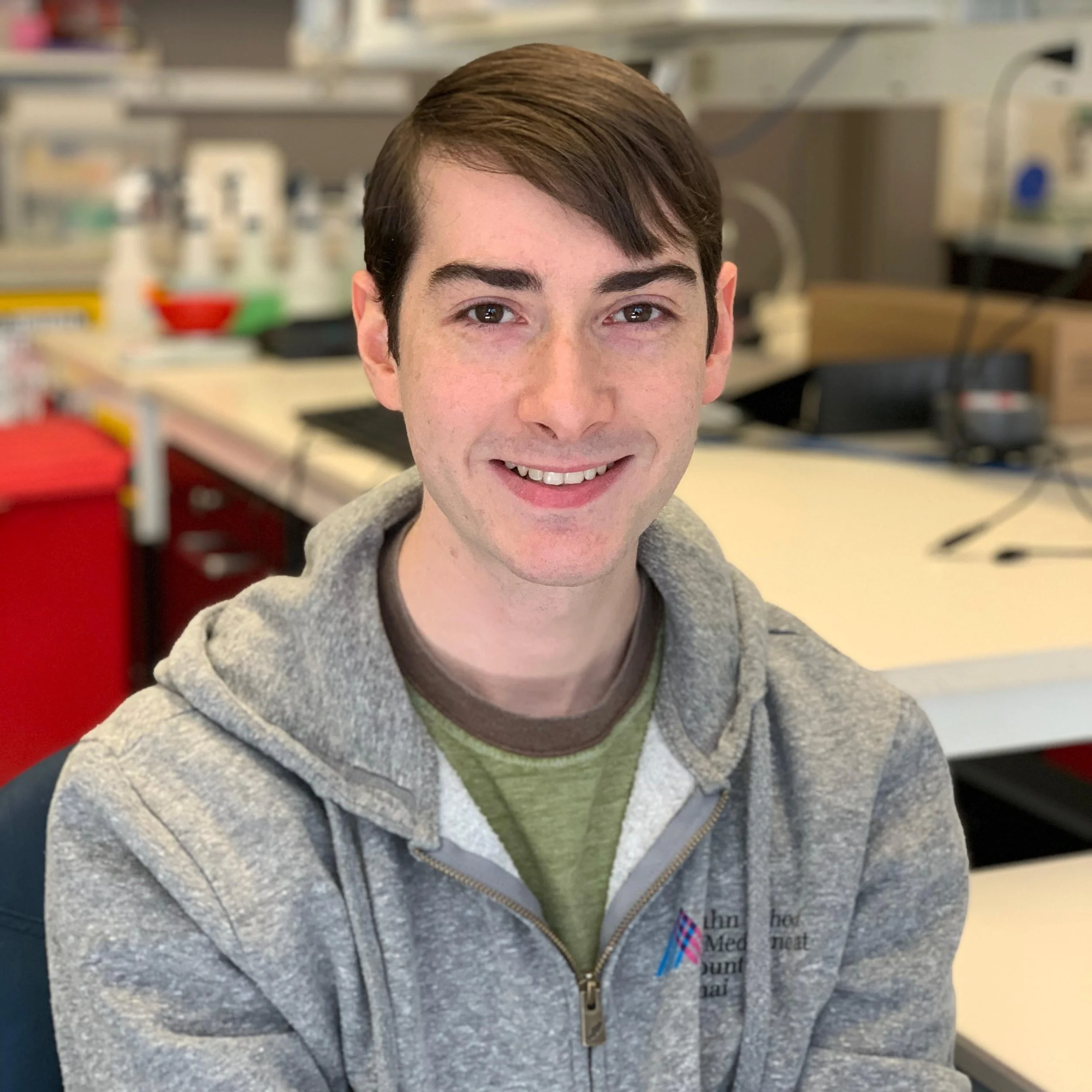
Paul Philipsberg is a Neuroscience PhD student at Mount Sinai who has been working with MiNDS for several years. Read all about his journey to science, his research, and his experience with MiNDS in a conversation with MiNDS co-president Emma Hays below!
Emma: What sparked your interest in science as a kid?
Paul: I feel like I’ve been interested in science as long as I can remember. I had a favorite book that had a lot of fun pictures in it. It was a geology textbook. So when I was real little I wanted to be a geologist when I grew up and I collected lots of rocks.
E: What excited you about it?
P: Knowing what everything is made of and how it works and how it all goes together I feel like is what was exciting about it. I was interested in electronics from a young age too, so I can take this thing apart and sometimes I can put it back together and it works.
E: Tell me about your journey to grad school.
P: In undergrad I didn’t really know what I wanted to study. I was undecided between medicine or robotics, so I waited to declare my major and eventually declared biomedical engineering because I didn’t have to pick, I could do both.
And then I started an internship during undergrad at National Laboratory because I had engineering and programming experience. It was at Brookhaven Lab and there was a professor at Stony Brook, which is where I went to undergrad, who did functional PET imaging for addiction studies and I thought that was neat that you could visualize the function of the brain that way. So I applied to this internship and I asked her, are you taking students this year, and she said no, all of that research is moving to Stony Brook, away from this lab. So I got involved in another project there.
After graduating I continued working on this project for a long time as a subcontractor for the National Lab for a few years, and I realized this is cool stuff but it’s not the kind of science that got me interested. I wanted to know how the brain works, so I applied for grad programs and ended up doing a Master’s degree at Mount Sinai in order to change fields back into neuroscience and I’ve been here ever since.
E: Tell me about your research.
P: I record electrical signals in the brain to study how the precise timing of messages between different parts of the brain helps form memories, and how changes in this timing causes problems in epilepsy.
E: And how do you study that?
P: I do in vivo electrophysiology in mice, so I use electrodes to record activity across brain regions while mice navigate a virtual reality environment.
E: What programs have you been involved with through MiNDS?
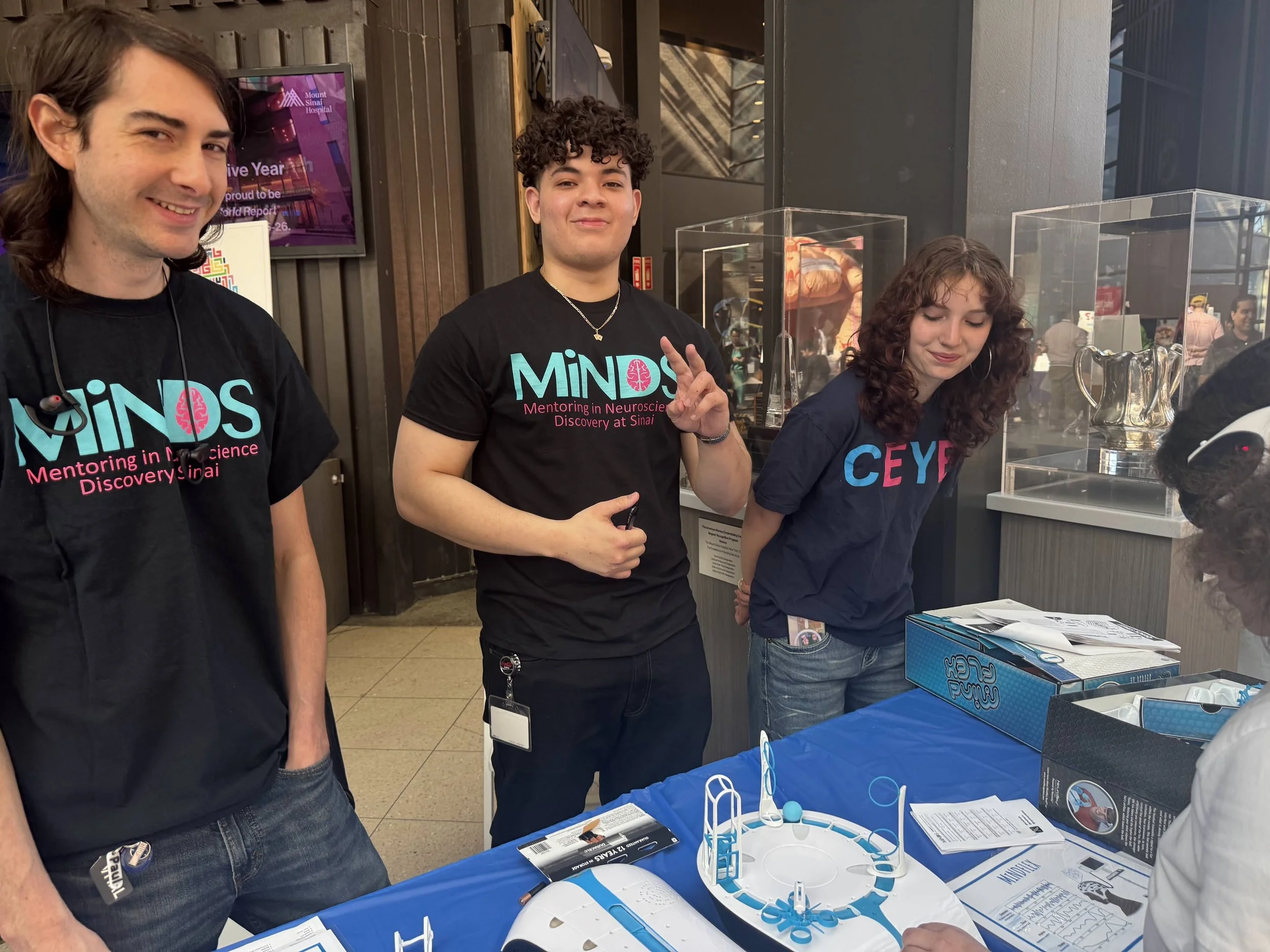
P: I do the Brain Fair pretty much every year. I’ve done teaching with PS 171. I’ve done the [Day with a Scientist] sheep brain dissections.
E: Can you tell me about a favorite or meaningful memory working with MiNDS?
P: One thing that was interesting this past Brain Fair at the Brain-Machine Interface booth one of the high school-aged students was asking me, “So if I want to do what you do, what kind of careers are there?” and that felt like I’m actually getting people interested in doing a career in science.
E: What advice do you have for a student who’s interested in a career in science?
P: The biggest thing is there are many paths. I didn’t take a very linear path. In high school I didn’t know what I wanted to do. And in undergrad I didn’t know what I wanted to do. And then I had this engineering job and I didn’t know if it was what I wanted to do. But eventually I got here. I feel like seeking out mentors who have taken different paths is important. Don’t be afraid to as early as you can reach out and say “How do I get where you are?”
E: I think that’s so true because I think people have this idea that you have to do this, this, and this in the exact right order and that’s just not the case for so many people and I think it makes for a richer experience generally.
E: Why do you think science communication and outreach is important?
P: Science takes a long time. And over the course of generations, we’ve come very far, but it has to build on what came before. So in order to get anywhere, one, we need to understand where we came from, and two, we need the next generation to care about it and pick up the mantle. Curiosity is the biggest thing—wanting to learn—it’s why science exists. I’m in a learning and memory lab because I want to know how things work. I think learning in general is very important, which is why I think teaching is also important, which is why I think MiNDS is very important.